
Enterprise & product foundation
SAP S/4HANA
- Materials
- Business partners
- Characteristics & classes
- Condition records
- Availability & plant data
Mercura CPQ + SAP S/4HANA
Turn SAP product and variant data into a guided, visual buying journey — then return an approved, traceable configuration to your SAP sales process.
Mercura complements S/4HANA, including landscapes that use LO-VC or Advanced Variant Configuration, by adding the sales UX, quote automation and channel flexibility complex manufacturers need.
Sales quotation
The 30-second answer
It is the commercial layer between customer requirements and an executable SAP sales order. Mercura gives sellers, dealers and customers a guided interface for complex configuration, pricing and proposals while S/4HANA continues to manage the enterprise processes, master data and order execution.
System responsibility
The target architecture depends on where configuration and pricing logic lives today. Mercura can orchestrate a sales experience around SAP-owned data, Mercura-owned rules or a deliberate hybrid.
Enterprise & product foundation
Configure · Price · Quote
Quote-to-production execution
SAP Sales Order API documentation →
Not by default. Mercura can complement AVC or LO-VC, or own selected configuration logic when that is the better architecture.
Yes. Pricing can stay in SAP, be split by responsibility or be calculated in Mercura for configuration-specific logic.
Yes. Mercura separates the sales experience from ERP screens while keeping the resulting order data governed.
Build vs. extend
SAP Advanced Variant Configuration is a strong engine for configurable product models across sales, planning, production and engineering. Mercura focuses on turning that complexity into a high-conversion sales experience.
Strong at
Typical sales-experience gap
Adds
Use SAP for the responsibilities SAP should own. Use Mercura where the buying and selling experience must become simpler than the underlying product model.
Platform decision
These products overlap at the edges, but they solve different center-of-gravity problems. A defensible architecture makes that split explicit.
| Decision criterion | SAP AVC / LO-VC | SAP CPQ | Mercura |
|---|---|---|---|
| Production-relevant variant model | Primary fit | Consumes or complements | Consumes or complements |
| SAP-suite quote lifecycle | Not the focus | Primary fit | Integrates by design |
| Bespoke visual product journey | Not the focus | Possible | Primary fit |
| Dealer or customer self-service UX | Not the focus | Supported | Primary fit |
| Cross-system product logic | SAP-centered | SAP-suite centered | Flexible orchestration |
| 2D/3D configuration feedback | Requires experience layer | Project-dependent | Native experience focus |
Choose SAP CPQ when a standardized SAP-suite quote process is the dominant requirement. Choose Mercura when a differentiated, visual sales experience and flexible product logic are the dominant requirements. Keep AVC or LO-VC authoritative where the configuration drives production.
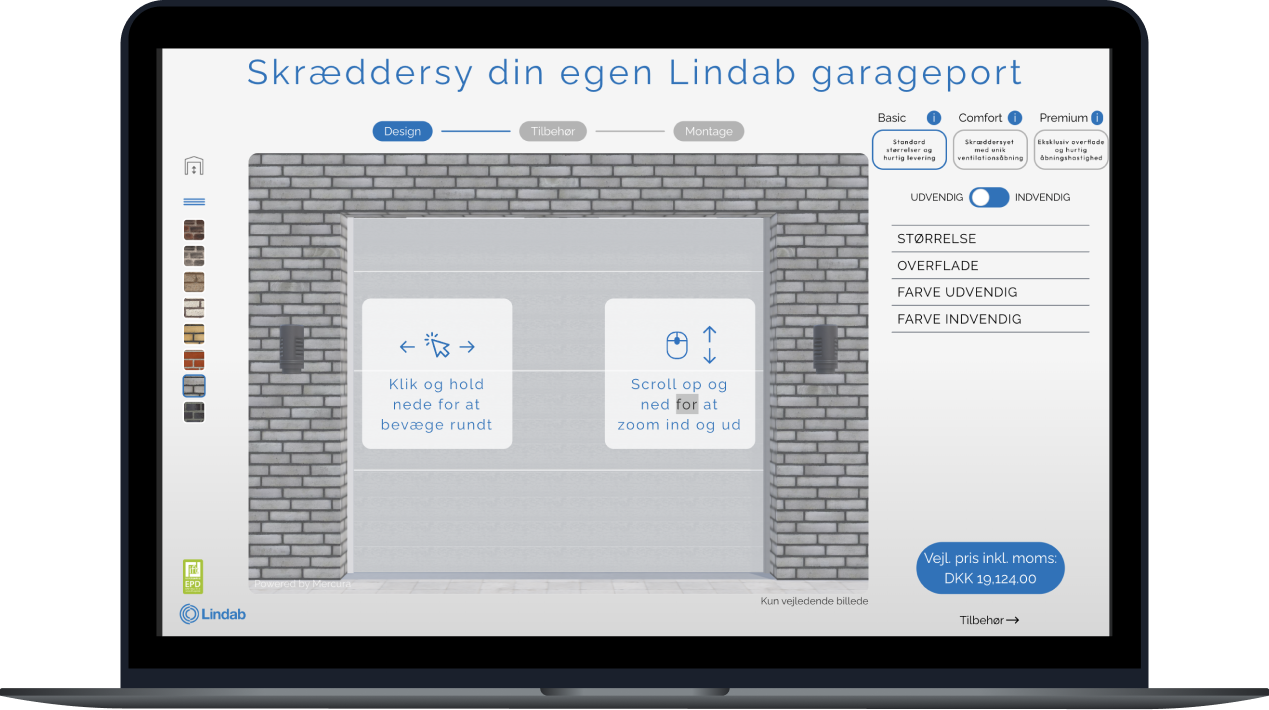
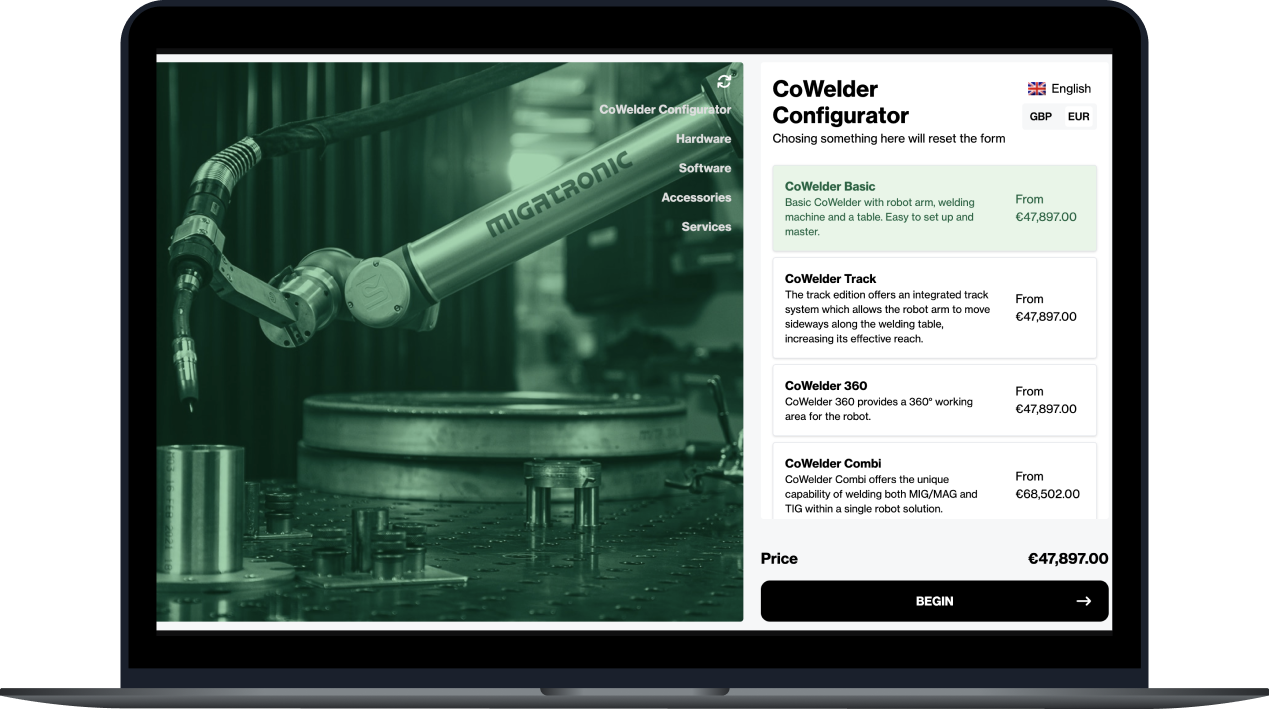
Mercura product experience
Mercura can power an internal sales tool, dealer portal or customer-facing configurator. The interface carries your brand; the configuration model keeps every choice valid; SAP remains the operational system behind the sale.
Shown: a live Mercura-powered configurator. This demonstrates the buyer experience, not a claim that this customer uses the SAP S/4HANA integration.
From configuration to commitment
Use the same structured configuration to create branded proposal documents with product descriptions, options, technical values, quantities and commercial terms — then map the approved result to SAP S/4HANA.

Landscape qualification
Edition, release and configuration strategy materially change what is possible. The workshop establishes these facts before anyone promises an interface.
Technical evaluation
The table below is a discovery framework, not a promise that every field belongs in every interface.
| Data | Direction | Typical integration | Decision to make |
|---|---|---|---|
| Materials | S/4HANA → Mercura | Released API / integration layer | Which products are sellable? |
| Customers | S/4HANA → Mercura | Business partner APIs | Which commercial context is needed? |
| Characteristics | S/4HANA ↔ Mercura | Variant configuration mapping | Which engine owns each rule? |
| Pricing inputs | S/4HANA → Mercura | Condition / simulation services | ERP price, CPQ price or hybrid? |
| Configuration | Mercura → S/4HANA | Order API + variant entities | How is traceability preserved? |
| Sales order | Mercura → S/4HANA | Sales Order A2X API | Synchronous or asynchronous handoff? |
| Documents | Mercura → customer / archive | Document service / agreed repository | Which output is commercially binding? |
| Status & errors | S/4HANA → Mercura | API response / integration monitoring | Who owns exception resolution? |
Delivery path
A successful SAP CPQ program aligns product modeling, commercial ownership, integration and user experience before it scales globally.
Select a product complex enough to test rules, pricing, documents and SAP output without becoming a transformation program.
Output: measurable pilot scope
Map what stays in AVC or LO-VC, what belongs in Mercura and where validation must cross the boundary.
Output: responsibility architecture
Confirm APIs, communication arrangements, master-data cadence, identity, errors and order payloads.
Output: testable interface specification
Validate with sales, product owners, SAP architects and operations before expanding products and channels.
Output: governed scale plan
Where it pays off
Translate capacity, environment, performance and option requirements into valid configurations.
Buying signal: Sales depends on specialists to interpret customer requirements.
Offer market-, role- and channel-aware experiences while preserving a shared product model.
Buying signal: Each region has built its own spreadsheets or local tools.
Combine configurable foundations with project-specific dimensions, calculations and proposal content.
Buying signal: The customer cannot understand the product from SAP characteristics alone.
Decision support
S/4HANA includes sophisticated product and variant configuration capabilities, especially AVC and LO-VC. A separate CPQ layer becomes relevant when you need guided selling, visualization, multi-channel sales experiences, commercial workflows or document automation beyond the ERP interaction.
It does not have to. Mercura can act as a sales-facing layer around SAP-owned models, own selected product logic, or use a hybrid split. The right pattern depends on model maturity, performance, channel needs and production ownership.
Read SAP's AVC overview →SAP's Sales Order APIs include structures for sales orders and variant-configuration data in supported releases. The exact create and update path must be verified against your S/4HANA edition, release and configuration model.
Both can be evaluated, but connectivity, released APIs, authentication and extensibility differ. Discovery confirms the available interfaces and the appropriate integration layer for your landscape.
SAP can remain the pricing authority, Mercura can calculate configuration-specific pricing, or the two can share responsibility. The architecture should preserve one explainable commercial result.
By defining ownership field by field, synchronizing only what the sales experience needs and preserving SAP identifiers throughout configuration, documents and order handoff.
Official technical resources
Technical content last reviewed 14 August 2026. Validate assumptions against your SAP edition and release.
Explore the capability stack
See it on your process
Bring one product model, one representative quote and your current SAP architecture. We will map responsibilities, interfaces and the smallest credible pilot.