Features > Integrations > NetSuite CPQ

Mercura CPQ + Oracle NetSuite

CPQ for Oracle NetSuite

Configure complex products, calculate the right price and create order-ready quotes while Oracle NetSuite remains your ERP system.

Mercura adds a dedicated product configuration and quoting layer for manufacturers selling configurable, make-to-order and engineer-to-order products. Keep NetSuite as the operational system of record while Mercura handles the product and sales complexity required before a clean order can be created.

See the integration architecture
  • Built for complex manufacturers
  • NetSuite remains the ERP master
  • Internal, dealer and customer-facing configuration
  • API-first integration
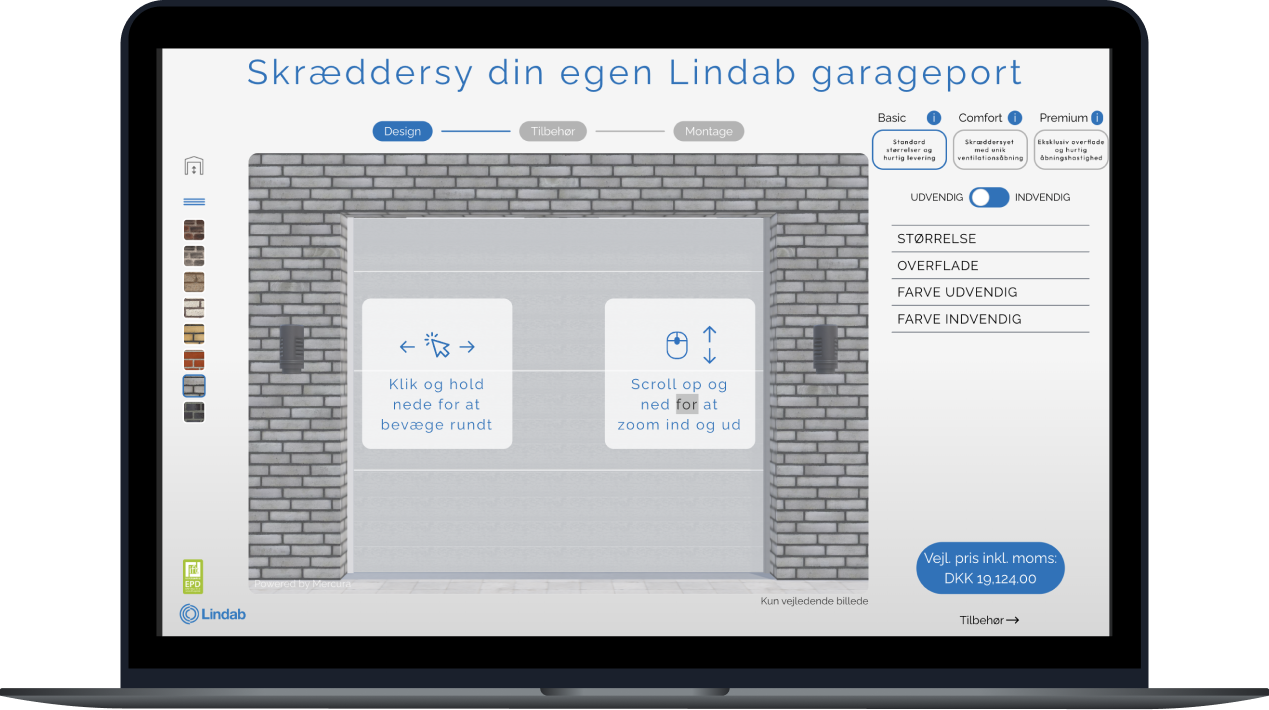
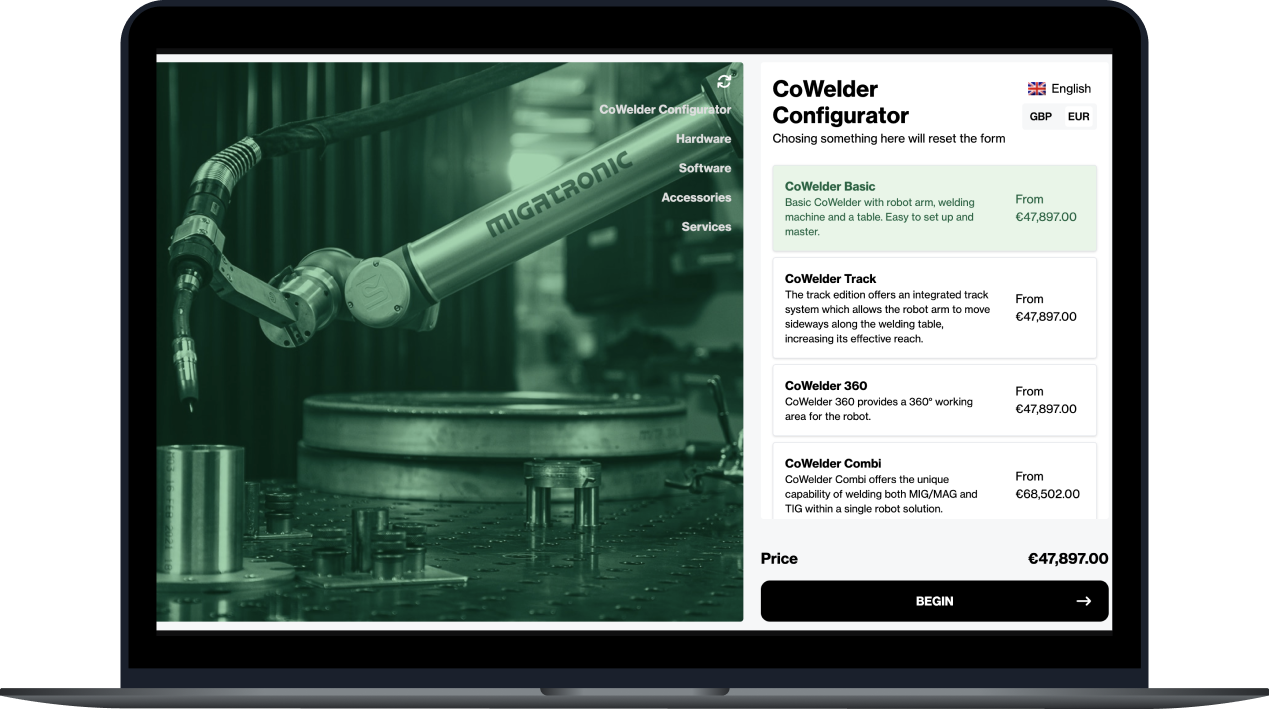
Mercura visual product configurator shown on a laptop
Oracle NetSuite Example output

Sales quotation

Customer
Nordic Manufacturing
Configured item
Industrial system
Status
Validated
Handoff
Order-ready
Illustrative data handoff, not a screenshot from a production NetSuite tenant.

What is CPQ for NetSuite?

What is CPQ for NetSuite?

CPQ stands for Configure, Price, Quote. A NetSuite CPQ process connects the decisions required to sell a configurable product with the commercial and operational processes managed in Oracle NetSuite. Instead of expecting a salesperson to manually determine the correct product, options, dimensions, components and price, a CPQ system guides them through the configuration and validates each decision. The resulting configuration can then become a structured NetSuite estimate, sales order or manufacturing input without somebody recreating the order manually.

A typical process

  1. 1
    Customer requirement

    The buyer or salesperson describes what needs to be achieved.

  2. 2
    Configure

    Determine the valid product, options, dimensions and accessories.

  3. 3
    Price

    Combine ERP pricing with configuration-specific formulas, additions, discounts or commercial rules.

  4. 4
    Quote

    Generate a customer-ready proposal containing the correct commercial and technical information.

  5. 5
    NetSuite

    Transfer the approved result into the agreed NetSuite sales and manufacturing process.

NetSuite continues to run the ERP process. Mercura handles the product and sales complexity required before a clean order can be created.

Native NetSuite CPQ

Does Oracle NetSuite already have CPQ?

Yes. And that matters when choosing your architecture.

Oracle offers NetSuite CPQ, a native CPQ solution for NetSuite. It includes product configuration, rules-based pricing, proposals, guided selling, visualization, ecommerce integration and manufacturing capabilities. Oracle also provides NetSuite CPQ Manufacturing and a NetSuite CPQ AI Assistant.

Not the question

Can NetSuite do CPQ?

The better question

Which CPQ architecture is right for the way we sell our products?

For some companies, native NetSuite CPQ is the natural choice. For others, it makes more sense to keep NetSuite as the ERP platform while using a dedicated, composable CPQ platform for configuration, visualization and digital sales experiences. That is where Mercura fits.

Architecture choice

NetSuite CPQ or Mercura CPQ + NetSuite?

There is no universal answer. The right choice depends on your product complexity, sales channels, user experience requirements and system architecture.

Consider native NetSuite CPQ when

  • You want CPQ closely embedded in the NetSuite ecosystem
  • Most users already work inside NetSuite
  • Your configuration requirements fit the native NetSuite CPQ model
  • SuiteCommerce is central to your digital sales strategy
  • Keeping configuration and ERP functionality within one Oracle environment is a priority

Consider Mercura + NetSuite when

  • Product configuration should be available outside the NetSuite interface
  • You need dedicated experiences for salespeople, distributors, dealers or end customers
  • You want one configuration engine behind multiple sales channels
  • Product rules are extensive and need to be maintained independently from ERP transactions
  • Configuration involves formulas, dimensions, dependencies or engineering calculations
  • Rich 2D or interactive 3D visualization is important to the buying process
  • You want to embed CPQ into a website, portal, CRM or custom application
  • Your CRM or sales portal sits outside NetSuite
  • You want NetSuite to remain the operational system of record without making it the frontend for every CPQ interaction
Put ERP responsibilities in NetSuite. Put configuration responsibilities in the system best suited to managing product complexity.

System responsibility

NetSuite runs your ERP. Mercura handles complex selling.

The exact ownership of each data object is defined during implementation. A good CPQ integration does not duplicate business logic unnecessarily.

ERP and master data

Oracle NetSuite

  • Items
  • Customers
  • Price information
  • Subsidiaries
  • Currencies
  • Units
  • Inventory
  • Purchasing
  • Financials
  • Manufacturing data
context
M

Configure · Price · Quote

Mercura

  • Guided selling
  • Product rules and constraints
  • Calculations
  • Product dependencies
  • Configuration-specific pricing
  • 2D and 3D visualization
  • Technical outputs
  • Quote generation
  • Dealer and customer experiences
approved result

Commercial and operational execution

Oracle NetSuite

  • Estimates
  • Sales orders
  • Order lines
  • Customer information
  • Manufacturing inputs
  • Fulfilment
  • Invoicing
  • Financial reporting

Oracle SuiteTalk REST Web Services documentation →

Will NetSuite still own customer and item data?

Yes. Mercura consumes the agreed ERP master data and returns the approved commercial result into the agreed NetSuite transaction structure.

Can configuration happen outside NetSuite?

Yes. Mercura can power internal sales tools, dealer portals, customer self-service and custom applications while NetSuite remains the ERP backend.

Should new integrations use REST?

Yes. Oracle recommends SuiteTalk REST Web Services with OAuth 2.0 for new integrations. SOAP is being phased out for new integrations from NetSuite 2027.1.

What Mercura adds

What Mercura adds to Oracle NetSuite

Complex product configuration

Turn engineering knowledge, compatibility requirements and commercial logic into reusable configuration rules. Instead of salespeople remembering which components fit together, Mercura evaluates the configuration while the user works.

  • Width and height constraints
  • Material compatibility
  • Required accessories
  • Mutually exclusive options
  • Dependency rules
  • Capacity calculations
  • Performance requirements
  • Regional variants
  • Product-specific formulas
  • Automatically calculated technical values

Guided selling

A customer may know the problem they need to solve without knowing your item numbers. Mercura can start with requirements rather than ERP fields.

What are you trying to achieve?

  • What capacity is required?
  • What dimensions are available?
  • Which environment will the product operate in?
  • Which regulatory requirements apply?
  • Which performance level is required?

Visual product configuration

Show users what they are configuring rather than asking them to interpret item codes. The visualization reacts to the same configuration logic used to validate and price the product.

  • Product images
  • Dynamic 2D visualization
  • Interactive 3D
  • Changing dimensions
  • Option visibility
  • Materials and finishes
  • Accessories
  • Technical drawings
Explore Mercura visual configuration →

Sales channels

A configurator does not have to live inside NetSuite

A major architectural decision is where users should configure the product. Mercura can power multiple routes to market while the resulting order continues into NetSuite.

Internal sales configuration

Give salespeople a structured process for turning requirements into a valid configuration and quote.

Dealer and distributor portals

Expose the relevant assortment, configuration rules and commercial logic to external sales channels.

Customer self-service

Allow customers to explore and configure products directly through your website or portal.

Custom applications

Use Mercura APIs and frontend capabilities to place configuration inside an existing digital experience.

One configuration model can therefore support multiple routes to market while the resulting order continues into NetSuite.

Mercura customer-facing visual product configurator

Mercura product experience

Give every buyer a configuration experience that feels purpose-built

Mercura can power an internal sales tool, dealer portal or customer-facing configurator. The interface carries your brand; the configuration model keeps every choice valid; NetSuite remains the operational system behind the sale.

  • Guided questions instead of ERP fields
  • Live 2D or 3D product feedback
  • Configuration-aware pricing and quote documents
  • One product model across direct, dealer and self-service sales
Open a live Mercura-powered configurator →

Shown: a live Mercura-powered configurator. This demonstrates the buyer experience, not a claim that this customer uses the NetSuite integration.

Proposal generation

From configuration to a customer-ready proposal

A technically correct configuration is only part of the sales process. The same structured data can be used to generate professional sales documents containing the information relevant to the customer.

  • Configured product and descriptions
  • Quantities, prices and discounts
  • Images and selected options
  • Technical specifications and drawings
  • Terms, customer and project information
  • Optional and alternative lines
Explore quote and document generation →

NetSuite handoff

Send the approved configuration to Oracle NetSuite

Once a configuration has been approved, Mercura maps the result into the agreed NetSuite transaction structure. The mapping depends on your NetSuite account, enabled modules, custom records, SuiteApps and manufacturing model.

Customer
Associate the configuration with the relevant NetSuite customer.
Estimate
Create or update the commercial estimate where NetSuite should own the quotation transaction.
Sales order
Transfer an accepted configuration into the NetSuite order process.
Configured lines
Transfer items, quantities, rates and other agreed commercial fields.
Configuration reference
Maintain a reference between the NetSuite transaction and the Mercura configuration.
Technical attributes
Transfer configuration-specific values required downstream.
Manufacturing information
Pass components, parameters or other structured information into the agreed manufacturing process when required.

From configuration to commitment

A quote your customer can understand. Data your ERP can execute.

Use the same structured configuration to create branded proposal documents — then map the approved result to Oracle NetSuite.

Customer-ready quote document generated from Mercura CPQ

REST-first integration

How does Mercura integrate with NetSuite?

NetSuite provides SuiteTalk REST Web Services for external applications to work with NetSuite records through REST APIs. REST services support record operations, and SuiteQL can be used when more advanced querying is required.

  • SuiteTalk REST Web Services
  • OAuth 2.0
  • NetSuite record APIs
  • SuiteQL where appropriate
  • Custom fields and custom records where required
  • RESTlets or SuiteScript only where the standard REST interface does not cover the required business process

REST-first architecture

Oracle recommends REST Web Services and OAuth 2.0 for new NetSuite integrations. Oracle has also announced the phase-out of SOAP Web Services, with new SOAP integrations no longer supported from NetSuite 2027.1 and final SOAP removal planned for 2028.2. For that reason, new Mercura implementations should be designed REST-first rather than building new dependencies on SuiteTalk SOAP.

Oracle SuiteTalk REST Web Services documentation →

Technical evaluation

What data can NetSuite and Mercura exchange?

A typical integration architecture may include the following exchange patterns. This is not a fixed template — a NetSuite implementation often contains custom fields, custom records, workflows, SuiteApps and company-specific transaction structures.

DataDirectionPurpose
ItemsNetSuite → MercuraReuse ERP item master data
CustomersNetSuite → MercuraCustomer-specific configuration and quoting
Units of measureNetSuite → MercuraKeep quantities consistent
SubsidiariesNetSuite → MercuraSupport multi-company structures
CurrenciesNetSuite → MercuraCommercial context
Pricing inputsNetSuite → MercuraUse ERP pricing as an input to CPQ
Inventory informationNetSuite → MercuraShow relevant availability where required
Custom records / fieldsNetSuite → MercuraReuse company-specific ERP data
Configuration referenceMercura → NetSuiteTrace configuration back to CPQ
Configured line itemsMercura → NetSuiteCreate clean transactional lines
EstimateMercura → NetSuiteContinue the quotation process in ERP
Sales orderMercura → NetSuiteContinue the order-to-cash process
Technical valuesMercura → NetSuitePreserve configuration-specific attributes
Component informationMercura → NetSuiteSupport configure-to-order processes where appropriate
The integration should match the environment you actually operate, not a generic diagram.

Pricing ownership

How should pricing work with NetSuite CPQ?

There is no reason to rebuild commercial logic in CPQ simply because a CPQ system has a pricing engine. The correct architecture depends on where your prices are maintained today.

Option 1: NetSuite owns pricing

NetSuite remains the pricing source and Mercura retrieves the relevant commercial result during the configuration process.

Best when

NetSuite already calculates the final price required by the sales process and CPQ mainly solves product configuration.

Option 2: NetSuite provides the commercial base, Mercura calculates the configuration

NetSuite supplies relevant item, customer or base pricing. Mercura then calculates configuration-dependent additions — for example base machine plus selected size, material factor, motor option, control package and accessories.

Best when

Commercial master data belongs in ERP but the final price depends on selections, dimensions, formulas or calculated properties.

Option 3: Mercura calculates the complete configured price

The complete pricing model is calculated in Mercura and the resulting line price is transferred to NetSuite.

Best when

Pricing is inseparable from the configuration model and depends heavily on technical parameters, calculations and product relationships.

Avoid duplicate pricing logic

NetSuite itself has significant pricing functionality, and native NetSuite CPQ can extend standard NetSuite pricing with configuration-dependent rules. If Mercura is used as the CPQ layer, each pricing rule should have a clear home. ERP pricing where ERP is best. Configuration pricing where configuration context is required.

Manufacturing handoff

Connect sales configuration with NetSuite manufacturing

For manufacturers, quotation is not the end of the process. Production needs to understand exactly what was sold. NetSuite's own CPQ Manufacturing functionality can generate work orders based on configured materials and routing steps. When Mercura is used instead, we first determine how your existing NetSuite manufacturing model should receive the configuration rather than imposing one universal BOM architecture.

01

Pattern 1: Select an existing manufacturable item

Mercura determines which existing NetSuite item corresponds to the selected configuration.

Best when: The range of manufacturable variants is already represented by items in NetSuite.

02

Pattern 2: Base item + configuration data

A base item represents the product family while Mercura supplies additional configuration-specific parameters.

Best when: You do not want a separate ERP item for every theoretical product combination.

03

Pattern 3: Configuration determines components

Mercura calculates required components and quantities from the product configuration and sends the agreed structure into the downstream process.

Best when: The manufacturing structure genuinely changes based on customer selections.

04

Pattern 4: CPQ → engineering → NetSuite

Mercura automates the repeatable commercial configuration and sends structured parameters to CAD, engineering or another technical system before the resulting structure continues into NetSuite.

Best when: Each order still requires engineering work, but a significant part of that work can be standardized before engineering becomes involved.

The right architecture depends on your manufacturing process. We do not assume every manufacturer should generate BOMs in exactly the same way.

Three-way comparison

NetSuite ERP, NetSuite CPQ and Mercura: what is the difference?

Capability NetSuite ERPNative NetSuite CPQMercura + NetSuite
ERP and financials Core responsibilityUses NetSuiteNetSuite remains responsible
Items and customers Core responsibilityNative accessIntegrated from NetSuite
Product configuration Limited without CPQYesYes
Rules-based pricing ERP pricingYesYes
Guided selling Not the core ERP purposeYesYes
Product visualization Not the core ERP purpose2D capabilities2D and interactive 3D
Proposal generation ERP sales documentsYesYes
SuiteCommerce Native NetSuite ecosystemNative integration availableCan integrate into external digital experiences
Custom dealer/customer UX Requires additional solutionDepends on chosen NetSuite architectureCore Mercura use case
Headless/custom frontend architecture Not an ERP objectiveRequires NetSuite-specific architectureCore Mercura architecture
Manufacturing handoff Core execution platformCPQ Manufacturing availableIntegrates configured output with NetSuite
Best fit Standard ERP executionCompanies wanting CPQ inside the NetSuite ecosystemCompanies wanting a dedicated CPQ layer across NetSuite and external sales channels

Oracle CPQ vs NetSuite CPQ

What about Oracle CPQ?

Oracle CPQ and NetSuite CPQ are not the same product. The Oracle product portfolio contains more than one CPQ offering.

NetSuite CPQ

NetSuite CPQ is a CPQ solution specifically within the NetSuite ecosystem.

Oracle CPQ

Oracle CPQ is Oracle's broader enterprise Configure, Price, Quote application within its CX portfolio — a cloud application for configuring products and services and creating accurate quotes.

This page is specifically about Mercura CPQ + Oracle NetSuite ERP.

When CPQ earns its place

When does NetSuite need a dedicated CPQ layer?

You probably do not need another CPQ system if a salesperson mainly selects standard items, enters quantities and applies an existing NetSuite price. A dedicated CPQ layer becomes more valuable when creating the correct order requires knowledge or calculations that go beyond standard item selection.

Engineering dependency

  • Which product should I use?
  • Is this combination possible?
  • Which components are required?
  • What dimensions will work?
  • Which accessories must be included?

Configuration complexity

  • Millions of theoretically possible combinations but only a subset are technically valid.
  • A configuration engine evaluates those relationships while the user sells.

Configuration-driven pricing

  • Price may depend on dimensions, material choices, accessories, customer agreements, calculated values and technical properties.

Manual quote creation

  • Sales combines NetSuite, spreadsheets, product documentation and Word templates to create a quotation.

Visual selling

  • Item names and ERP codes are often meaningful internally but poor tools for helping a customer understand a configurable product.

Multiple sales channels

  • Your internal team, dealers and customers may all need to configure the same products through different interfaces.

Strong fit

Products

  • • Configurable industrial equipment
  • • Machinery
  • • Building products
  • • HVAC and ventilation systems
  • • Doors and windows
  • • Technical components
  • • Medical or assistive equipment
  • • Electrical systems
  • • Material handling equipment
  • • Engineered systems
  • • Other configure-to-order or engineer-to-order products

Sales process

  • • Large numbers of product combinations
  • • Technical dependencies
  • • Rules and constraints
  • • Calculated dimensions
  • • Complex pricing
  • • Dealer sales
  • • Self-service configuration
  • • Visual configuration
  • • Automated technical proposals
  • • BOM or engineering handoff

Probably unnecessary

  • Nearly everything you sell is a standard NetSuite item
  • Quotes require little or no configuration
  • Existing NetSuite functionality already produces the process you need
  • Native NetSuite CPQ fully meets your configuration and frontend requirements
The goal is not to add another application to your stack. It is to remove complexity from the quote-to-order process where that complexity actually exists.

Landscape qualification

What we validate in your NetSuite landscape

There is no credible one-click integration promise for a heavily customized ERP environment. Before defining the integration, we identify:

NetSuite environment

  • • NetSuite edition and enabled modules
  • • OneWorld and subsidiary structure
  • • Manufacturing functionality
  • • SuiteCommerce usage
  • • Installed SuiteApps

Product data

  • • Item types
  • • Assemblies
  • • Matrices
  • • Units
  • • Custom records
  • • Custom fields
  • • Product hierarchy

Pricing

  • • Where pricing is mastered
  • • Customer-specific pricing
  • • Market-specific pricing
  • • Discounts
  • • Configuration-specific calculations

Sales transactions

  • • Opportunities
  • • Estimates
  • • Sales orders
  • • Required header fields
  • • Required line fields
  • • Approval workflows

Manufacturing

  • • Assembly model
  • • BOM structure
  • • Routings
  • • Work orders
  • • Custom production processes
  • • CAD or engineering dependencies

Integration

  • • Standard REST record coverage
  • • SuiteQL requirements
  • • Custom records and fields
  • • RESTlet requirements
  • • Authentication
  • • Synchronization frequency
  • • Error handling and traceability

Delivery path

From product knowledge to production-ready NetSuite orders

The integration is one workstream. The bigger win comes from making product, pricing and sales knowledge explicit enough to automate.

  1. 01

    Model one representative product

    Capture options, dependencies, formulas, pricing inputs and the expected NetSuite transaction output.

    Output: validated pilot model

  2. 02

    Map the NetSuite contract

    Identify items, customers, pricing, custom records, estimate or order fields, REST coverage and error handling.

    Output: field-level interface map

  3. 03

    Build the sales experience

    Design the guided flow, permissions, visual feedback and customer document around real users and channels.

    Output: testable end-to-end workflow

  4. 04

    Pilot, reconcile and scale

    Compare Mercura output with NetSuite, train a focused user group and expand product by product.

    Output: governed rollout

Decision support

NetSuite CPQ questions, answered

Does NetSuite have CPQ? +

Yes. Oracle offers a native NetSuite CPQ solution with product configuration, dynamic pricing, quote and proposal functionality, guided selling, ecommerce capabilities and manufacturing extensions. Mercura is relevant for organizations that want NetSuite to remain the ERP while using a separate CPQ platform for product configuration and digital sales experiences.

Is Mercura a replacement for Oracle NetSuite? +

No. Mercura does not replace NetSuite as the ERP. NetSuite continues to manage the operational and financial processes that belong in ERP. Mercura adds configuration, guided selling, visualization, configuration-specific calculations and quote automation around the sales process.

Is Mercura an alternative to NetSuite CPQ? +

Yes. Mercura can be used as a dedicated CPQ layer alongside NetSuite ERP instead of using native NetSuite CPQ. The better architecture depends on your product complexity, sales channels, frontend requirements and how tightly you want configuration logic coupled to NetSuite.

What is the difference between Oracle CPQ and NetSuite CPQ? +

They are separate Oracle products. NetSuite CPQ is the CPQ offering within the NetSuite ecosystem. Oracle CPQ is Oracle's enterprise CPQ application in its broader CX portfolio. Mercura can be evaluated as an independent CPQ layer connected to NetSuite ERP.

How does Mercura connect to NetSuite? +

New implementations should normally use NetSuite SuiteTalk REST Web Services with OAuth 2.0 authentication. SuiteQL can be used for more advanced queries, while RESTlets or other NetSuite customizations can be introduced where standard REST records are not sufficient.

Oracle SuiteTalk REST Web Services documentation →
Does the integration use SuiteTalk SOAP? +

Existing integrations may still use SOAP, but we would not recommend SOAP as the foundation for a new NetSuite integration. Oracle recommends REST Web Services for new integrations and has announced the eventual removal of SOAP Web Services.

Can NetSuite remain the pricing master? +

Yes. NetSuite can calculate pricing, provide pricing inputs to Mercura, or receive a configured price calculated by Mercura. The correct model depends on where your pricing logic is maintained and whether final price depends on configuration-specific calculations.

Can Mercura create NetSuite estimates and sales orders? +

The approved configuration can be mapped into the agreed NetSuite sales transaction flow, including configured lines and relevant commercial and configuration information. The exact transaction design depends on your NetSuite setup and required approval process.

Can Mercura use NetSuite inventory information? +

Yes, relevant inventory or availability information can be incorporated where it adds value to the configuration process. NetSuite should remain the source for inventory data rather than duplicating inventory management inside CPQ.

Can Mercura work with NetSuite OneWorld? +

A multi-subsidiary architecture can be supported by mapping the relevant company, subsidiary, assortment, currency, customer and integration context. The exact design should be validated against the customer's NetSuite OneWorld setup.

Can Mercura generate BOM information for NetSuite? +

Yes, Mercura can calculate configuration-dependent component information. Whether that should become an existing assembly, configuration parameters, a component structure, a work order input or an engineering handoff depends on the manufacturing architecture used in NetSuite.

Can Mercura integrate with CRM as well as NetSuite? +

Yes. A common architecture is CRM → Mercura CPQ → NetSuite. The CRM owns the opportunity and customer-facing sales activity, Mercura owns the configuration process, and NetSuite handles ERP execution. Mercura can also be embedded into a custom portal or sales application.

Can customers or dealers configure products without working directly in NetSuite? +

Yes. Mercura can provide dedicated internal, distributor, dealer or customer-facing configuration experiences while NetSuite remains the backend ERP. This is one of the main reasons to use a dedicated CPQ layer rather than requiring every configuration interaction to happen inside the ERP interface.

Official technical resources

Technical content last reviewed August 2026. Validate assumptions against your NetSuite edition, release and enabled modules.

See it on your process

Configure in Mercura. Execute in NetSuite.

Build the right CPQ architecture around NetSuite

Oracle NetSuite is already capable of running the operational side of a sophisticated manufacturing business. The question is whether your product configuration process should live there too. Bring a sample product, NetSuite item structure or existing quotation process and we can map how configuration, pricing and order data should move between the systems.

Book a NetSuite CPQ demo

Choose a time that works for you